
Updated June 2026
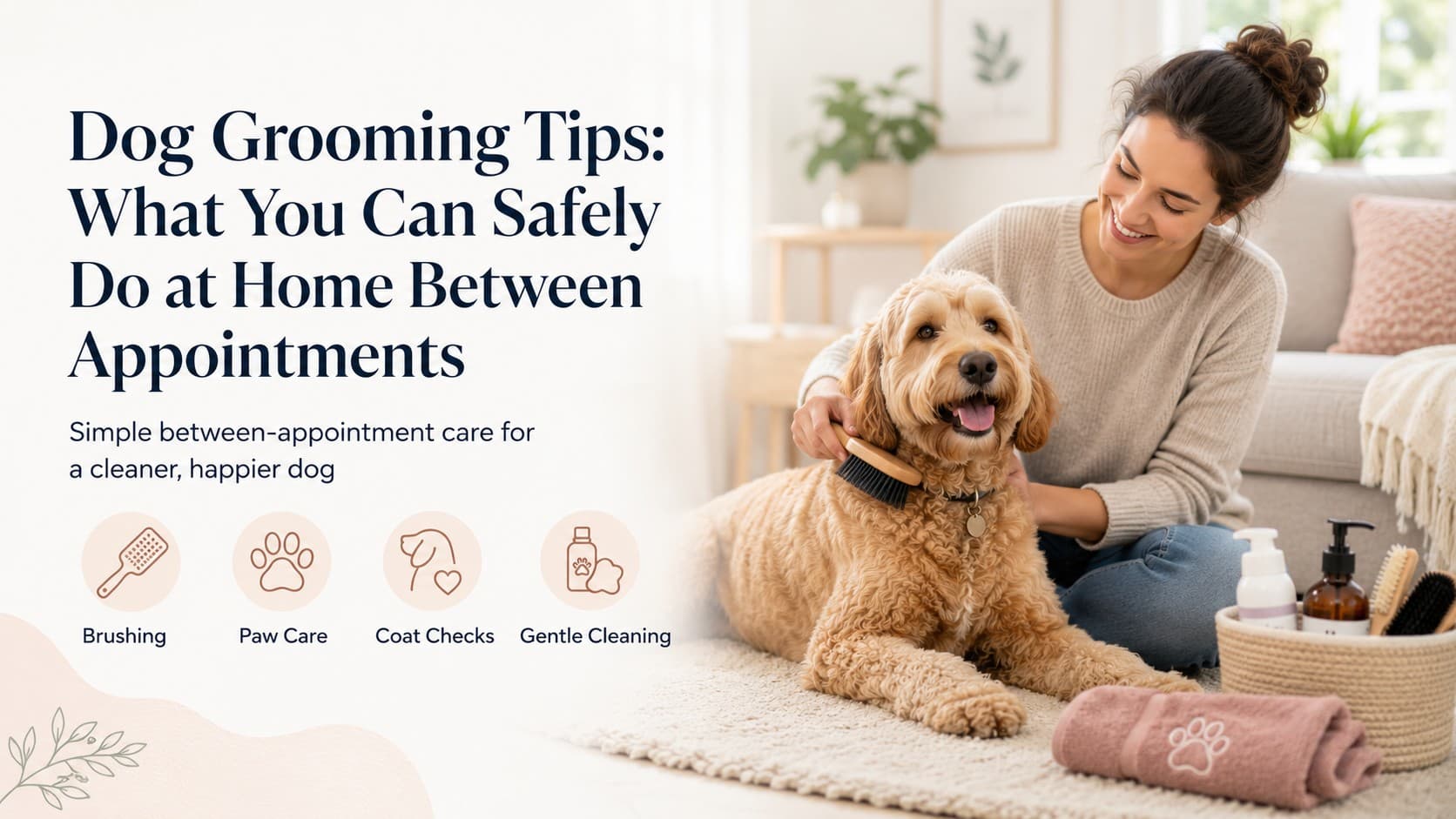
Dog Grooming Tips: What You Can Safely Do at Home Between Appointments
At home you can safely brush your dog, bath them with dog shampoo, dry them properly, lightly trim the tips of the nails, and check the ears and teeth. Leave clipping, scissoring, styling and mat removal to a professional groomer.
Your dog doesn't stop getting muddy, fluffy or tangled just because the next grooming appointment is three weeks away. The good news is that a little regular care at home makes a huge difference, to your dog's comfort, to how they look, and to how smoothly their professional groom goes. These tips help you do the simple, safe maintenance yourself, while knowing exactly where to draw the line and leave the rest to a professional.
Why home grooming matters between appointments
Think of home grooming like brushing your teeth between dentist visits. You are not trying to do the groomer's job, you are keeping things in good shape so the bigger job is easier, calmer and kinder on your dog. Most dogs are professionally groomed every four to eight weeks, depending on their coat (see our guide on how often your dog should be groomed). That is a long gap, and a lot can happen to a coat in that time. Regular home grooming helps to:
- Prevent knots and matting before they tighten against the skin.
- Reduce shedding and keep hair off your sofa and clothes.
- Keep smells down by removing trapped dirt, moisture and debris.
- Spot problems early, such as lumps, sore spots, grass seeds, ticks or ear gunk.
- Lower stress by getting your dog used to being handled gently and often.
That last point is the one owners underestimate. A dog who is brushed calmly at home learns that grooming is normal and safe, so by the time they reach the groomer they are far more relaxed. That matters enormously for puppies and anxious dogs (see grooming a nervous dog and puppy grooming). Home grooming is not about replacing the professionals; it is maintenance between the proper jobs.
The basic dog grooming kit every owner should have
You do not need a salon's worth of equipment. A simple kit covers almost everything an owner needs for at-home upkeep. Useful tools to keep in a drawer include:
- A brush suited to your dog's coat (more on choosing one below).
- A metal comb to check for hidden knots close to the skin.
- Dog-specific shampoo. Never use human shampoo unless your vet advises it.
- A few old towels and, ideally, a pet-safe dryer or a normal hairdryer on a cool, low setting.
- Dog nail clippers or a nail grinder, used cautiously.
- Dog ear-cleaning wipes or a solution recommended by your vet.
- A dog toothbrush and dog toothpaste. Human toothpaste is toxic to dogs.
- Plenty of treats to keep the experience positive.
Notice what is not on the essentials list: clippers and grooming scissors. Those are specialist tools, and most owners are better off leaving them to a groomer.
Brushing is the most important at-home habit
If you only do one thing at home, make it brushing. It is the single most valuable part of any home grooming routine, and it is where knots and matting are won or lost. How often you brush depends on the coat:
- Long or curly coats, like Cockapoos, Poodles and Shih Tzus: little and often, ideally every day.
- Double coats, like Labradors, Huskies and German Shepherds: a few times a week, and more during seasonal moults.
- Short, smooth coats, like Whippets and Staffies: once a week is usually plenty.
Choosing the right brush for your dog's coat
The right brush depends entirely on the coat type:
- Slicker brush: fine wire bristles, great for removing tangles and loose hair in long, curly or double coats.
- Pin brush: gentler, good for finishing and for longer silky coats.
- Bristle brush: best for short, smooth coats and for adding shine.
- Undercoat rake or de-shedding tool: for thick double coats that drop a lot of hair.
- Metal comb: your check tool. If the comb will not pass through, a knot is forming.
Brush gently in the direction the hair grows, working in small sections, and always reward calm behaviour. If you hit a tangle, tease it apart gently with your fingers or a comb rather than dragging the brush hard through it.
Bathing your dog at home
A bath at home is perfectly doable for most dogs, as long as you keep it gentle and do not overdo it. Most dogs only need a bath every four to six weeks, or when they are genuinely dirty. Over-bathing strips the natural oils and can leave the skin dry and itchy, so resist the urge to bath after every muddy walk. A quick rinse of the paws and belly is usually enough. To get the bath right:
- Brush first, always. Water tightens existing knots into solid mats.
- Use lukewarm water and a non-slip mat in the bath or shower.
- Use a dog-specific shampoo. Human shampoo has the wrong pH for dogs and can irritate their skin.
- Keep water and shampoo out of the eyes and ears. A damp cloth is safer for the face.
- Rinse thoroughly. Leftover shampoo is a common cause of itching.
Drying matters too. Damp fur is a fast track to knots, matting and a doggy smell. Towel-dry well, then use a dryer on a cool or low-warm setting, brushing as you go for fluffy coats. Never use high heat, and never leave a long or double coat to air-dry in a heap, because that is exactly how mats form. If bathing stresses your dog, keep sessions short and positive, and do not force it.
Can you use dog grooming clippers at home?
This is where we gently pump the brakes. Clippers look simple, but they are one of the easiest ways for a well-meaning owner to hurt or frighten their dog. Groomers urge caution because:
- Clippers can nick or burn the skin, especially around the face, paws, armpits and other folds.
- Blades get hot quickly and can cause burns without you realising.
- Clipping over a mat can pull painfully and even cut the skin underneath.
- A bad clip can damage some coats. Double coats in particular do not always grow back the same.
- One bad experience can make a dog fearful of grooming for life.
If you do use clippers for very light tidying, for example around sanitary areas, use a dog-specific clipper, go slowly, keep the blade flat, and stop the moment your dog is uncomfortable. For anything resembling a full body clip or a breed trim, it is genuinely safer and kinder to book a professional.
Should you use dog grooming scissors at home?
Scissors carry the same warning, only sharper. Scissors near a wriggling dog and thin skin are a real injury risk, and the danger is highest exactly when owners are most tempted to reach for them, which is matting. Never cut a mat out with scissors. Mats sit tight against the skin, which often tents up into the mat where you cannot see it, so it is frighteningly easy to cut your dog rather than the knot. It is one of the most common home-grooming injuries groomers see.
Safe scissor use at home is limited to:
- A light trim of the hair around the eyes, with blunt-tipped safety scissors, only if your dog is calm and still.
- Trimming a little excess hair between the paw pads, very carefully.
For shaping, face trims or removing mats, leave the scissors to a professional. A groomer has the right tools to remove matting safely, often without cutting at all.
Nails, ears and teeth: simple checks you can do
Beyond the coat, a few gentle checks keep your dog comfortable between grooms.
- Nails: long nails are uncomfortable and can affect how a dog walks. If you clip, take off only the very tip and avoid the quick, the pink blood-filled part inside the nail. On dark nails the quick is hard to see, so trim conservatively or use a grinder. If you are nervous, ask your groomer or vet to do it.
- Ears: have a weekly look and sniff. Healthy ears look clean and smell neutral. Wipe only the visible part with a vet-recommended cleaner or wipe, and never push anything down into the ear canal.
- Teeth: brush with a dog toothbrush and dog toothpaste a few times a week. Human toothpaste contains ingredients that are toxic to dogs.
One important thing: redness, swelling, a bad smell, discharge, bleeding, head-shaking, pawing at the ears or any sign of pain are not jobs for home grooming. Contact your vet.
Common home grooming mistakes to avoid
A quick checklist of the most common home grooming mistakes:
- Cutting close to the skin with scissors or clippers.
- Pulling or cutting at mats instead of leaving them to a professional.
- Bathing before brushing, which sets knots solid.
- Using human shampoo or toothpaste.
- Over-bathing and stripping the natural oils.
- Leaving the coat damp, which invites mats and smells.
- Forcing a frightened dog to continue, which damages trust and makes future grooming harder.
- Cleaning deep inside the ears.
When in doubt, do less. Gentle and incomplete beats thorough and stressful every time.
When to stop and book a professional
Part of being a good home groomer is knowing when to stop. Book a professional groom, or call your vet if it is a health concern, if you notice any of the following:
- Matting that is tight, widespread or close to the skin.
- Signs of pain, bleeding, swelling, redness or skin irritation.
- A persistent bad smell, discharge or sore ears.
- A dog that becomes distressed, frightened or aggressive when handled.
- A coat or trim you are simply not confident doing, face, feet and breed styling especially.
There is no shame in this. Professional groomers do this safely every day, and a good groom resets the coat so your home maintenance is easy again. It is worth knowing how much dog grooming costs so you can plan regular visits, and how to choose a dog groomer near you who is right for your dog.
How Groomeroo helps keep your dog comfortable
Doing the simple things at home, brushing, gentle baths and quick checks, keeps your dog comfortable and makes professional appointments quicker, calmer and less stressful for everyone. A well-maintained coat means the groomer can focus on a tidy finish rather than fighting through mats.
When it is time for the proper job, Groomeroo helps you find trusted mobile dog groomers across the UK who come to your home, so your dog stays in familiar surroundings. Search by your town or region, compare the services each groomer offers and the areas they cover, and book the one that suits you. Whether you have a nervous rescue, a bouncy puppy or a double-coated shedder, a little home care plus the right local groomer is the winning combination.
Frequently asked questions
What dog grooming can I safely do at home?
Brushing, gentle bathing with dog shampoo, drying properly, light nail-tip trimming, simple ear and teeth checks, and trimming small amounts of hair around the eyes and paw pads. Leave clipping, styling and mat removal to a professional.
What should be in a basic dog grooming kit?
A brush suited to your dog's coat, a metal comb, dog shampoo, towels and a cool-setting dryer, dog nail clippers, vet-recommended ear wipes, and a dog toothbrush with dog toothpaste. Plus plenty of treats.
Which dog grooming brush is best for my dog?
It depends on the coat: a slicker brush for tangles in long or curly coats, a pin brush for silky coats, a bristle brush for short coats, and an undercoat rake or de-shedding tool for thick double coats. A metal comb is your check tool for hidden knots.
How often should I bath my dog at home?
For most dogs, every four to six weeks, or when they are genuinely dirty. Over-bathing strips the natural oils, so a quick paw-and-belly rinse after muddy walks is usually enough. Always brush before bathing.
Can I use dog grooming clippers and scissors at home?
With great caution, and only for very light tidying. Never cut mats with scissors or clip over them, because the skin can tent up into the mat and be cut easily. For full clips, trims and matting, book a professional groomer.
When should I see a vet instead of grooming at home?
If you notice pain, bleeding, swelling, redness, skin irritation, a persistent bad smell, ear discharge, or your dog is distressed. These need a vet or a qualified professional, not home grooming.
Find a mobile dog groomer near you
Compare trusted mobile dog groomers in your area by service and coverage.
Find groomers